What to see in Zanzibar: an honest map of the island
Updated September 24, 2026 · 7 min read
Zanzibar is smaller than most people picture it and further apart than the brochures suggest. Unguja – the main island, the one nearly everybody means when they say “Zanzibar” – is about 85 km from the northern tip at Nungwi to Kizimkazi in the south. That sounds like nothing. On roads where a goat, a dala-dala minibus and a loaded lorry share the same lane, it is two to two and a half hours each way, and it is the single thing that decides which of the island’s sights you will actually see.
So this is not a list of everything. It is a map of what the island holds, how far it is from where you are probably staying, and which of it repays the journey.
Stone Town: the reason the island is on the UNESCO list
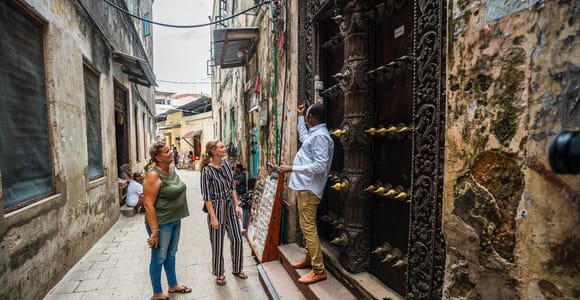
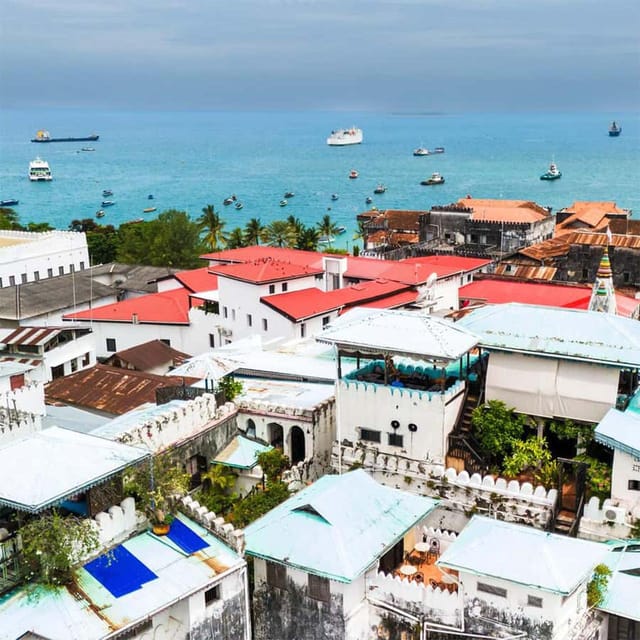
Stone Town was inscribed as a World Heritage Site under the name Stone Town of Zanzibar, described by UNESCO as an outstanding example of a Swahili trading town – African, Arab, Indian and European influences layered over more than a thousand years, built in coralline ragstone and mangrove timber, with the elaborately carved double “Zanzibar” doors that people photograph without knowing what they are looking at.
The honest part: the single building you have seen on every Zanzibar postcard, the House of Wonders (Beit-el-Ajaib) on the seafront, partially collapsed on 25 December 2020. The clock tower came down with it and two people inside were killed. It has been closed to the public ever since, and there is no confirmed reopening date. Restoration has been pledged and discussed for years. If a tour description promises you the House of Wonders, it is selling you a façade behind scaffolding.
What is open is better anyway: the Old Fort, the Old Dispensary, the two cathedrals, Darajani market at the hour the fish arrives, and the alleys, which are the actual attraction and cannot be seen from a vehicle. The town is small enough to cross on foot in twenty minutes and confusing enough that you will not. There are 147 Stone Town offers in the current stock, from €9.66 – see the Stone Town tours – and the detail of what a guided walk does and does not include is in Stone Town on foot.
Jozani: the one thing here that exists nowhere else
Jozani Chwaka Bay National Park, roughly 35 km south-east of Stone Town, holds the Zanzibar red colobus (Piliocolobus kirkii) – a monkey found on Unguja, Uzi and Vundwe and on no other land on earth. It is listed as Endangered on the IUCN Red List, and the most complete census published to date, in the journal Oryx, counted just over 5,800 animals.
That is the strongest single claim this island can make, and it takes about ninety minutes to see. The mangrove boardwalk on the far side of the road is part of the same ticket and is usually the quieter half. There are 92 nature and forest offers from €15.02 under nature and Jozani Forest; what the walk is actually like, and the entrance-fee trap in the tour titles, is in Jozani Forest and the red colobus.
The water: sandbanks, reefs and one island you cannot land on
The boat trips fall into two groups, and they leave from opposite ends of the island.
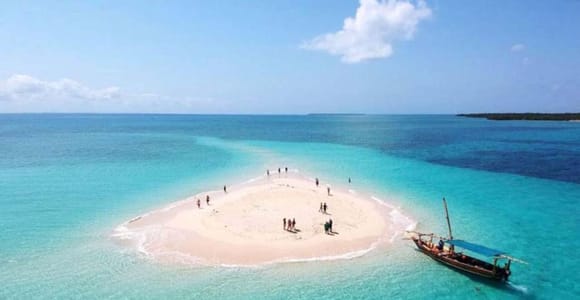
From Stone Town and Fumba, south and west: Prison Island (Changuu) with its Aldabra giant tortoises, and the sandbank Nakupenda, which is a bank of sand that appears at low tide and disappears again. This is the classic half-day-to-full-day combination and, adding every operator together, the most booked boat day on the island – 137 island offers from €10 under island tours.
From Nungwi, Kendwa and Matemwe, north: the Mnemba atoll. The snorkelling here is the best on Unguja and the reef is a declared marine conservation area. One thing almost no listing says plainly: Mnemba island itself is private. Access is limited to guests of the lodge on it, and boats that approach the beach are turned away. A trip sold as “Mnemba” takes you to the reef and the water around it, which is the good part – but if you booked it expecting to walk on that island, you were mis-sold. There are 88 snorkelling offers from €10 at snorkelling.
Dolphins sit slightly apart from both, because the question there is not where but whether. Kizimkazi in the far south lies inside the Menai Bay Conservation Area, Zanzibar’s largest marine protected area at 470 km², established in 1997. Published research from this exact stretch of coast found that nursing females change their behaviour when tour boats are present. 90 offers from €14.41 at swim with dolphins, and the case for and against booking one is in the dolphin swim.
The spices, and why the island is named after them
The spice farms are inland, mostly between Stone Town and Jozani, which is why they are bundled with almost everything. Clove, nutmeg, cinnamon bark, vanilla, the lipstick tree – a good guide makes you smell and taste rather than look, and a bad one runs a fifteen-minute circuit and sells you a bag. This holds the cheapest offer on the whole island: 86 offers from €7.91 at spice farm tours, with cooking and Swahili food at food and cooking tours from €10.
The mainland: the biggest thing the island sells
The single most booked offer in Zanzibar’s entire stock does not happen in Zanzibar. It is a day trip to Mikumi National Park on the Tanzanian mainland, by light aircraft, there and back between breakfast and dinner. Mikumi covers 3,230 km²; Nyerere National Park, carved out of the former Selous Game Reserve in 2019, covers 30,893 km² and is the largest national park in East Africa.
It is also, by a wide margin, the most expensive thing here – 47 safari offers from €61.49, with a median of €632.46, at safari from Zanzibar. Whether one day is enough, and what the cheap end of that range actually buys, is in safari from Zanzibar.
For adrenaline the island is thinner than its marketing: 15 offers from €12.65 at adventure tours, and the one with a real following is the quad circuit behind Nungwi, covered in quad biking in Nungwi and Kendwa.
Two practical things nobody mentions until you land
Insurance is compulsory and your own policy does not count. Under the UK
government’s travel advice for Tanzania, all visitors to Zanzibar except
residents must hold Inbound Travel Insurance from the Zanzibar Insurance
Corporation (ZIC) for the duration of their stay, up to 92 days. Other
international policies are not accepted for this purpose. The only official
place to buy it is inbound.visitzanzibar.go.tz; buy it before you fly and have
the confirmation with you at immigration. Check the current price and cover
period there rather than on a booking blog.
Do you need a car? Almost certainly not. Traffic is on the left, and every foreign driver needs a Zanzibar-issued driving permit – an international permit on its own is not enough, and the UK advice says the same. Nearly everyone here moves by transfer, taxi or driver, which is why there are 59 transfer offers from €9.66 at airport transfers and why two of the island’s twenty-five most booked products are plain airport transfers. If you still want your own vehicle – for Pemba, or for a long stay in the east – then compare car hire for Zanzibar and let the hire company arrange the local permit, which is what they do.
If you only have a week
North coast base: Mnemba and snorkelling on one day, the quads or a sunset dhow on another, Stone Town as a long day trip. South or east base: Jozani and the caves close by, Kizimkazi if you have made your peace with it, Stone Town again as the long day. Stone Town base: everything is closer, the beach is worse.
The safari, if you do it, eats a whole day and should not be put next to a travel day. There are 152 land-based experiences from €7.91 at things to do in Zanzibar and 52 sunset sailings from €10.54 at sunset dhow cruises for the evenings in between.